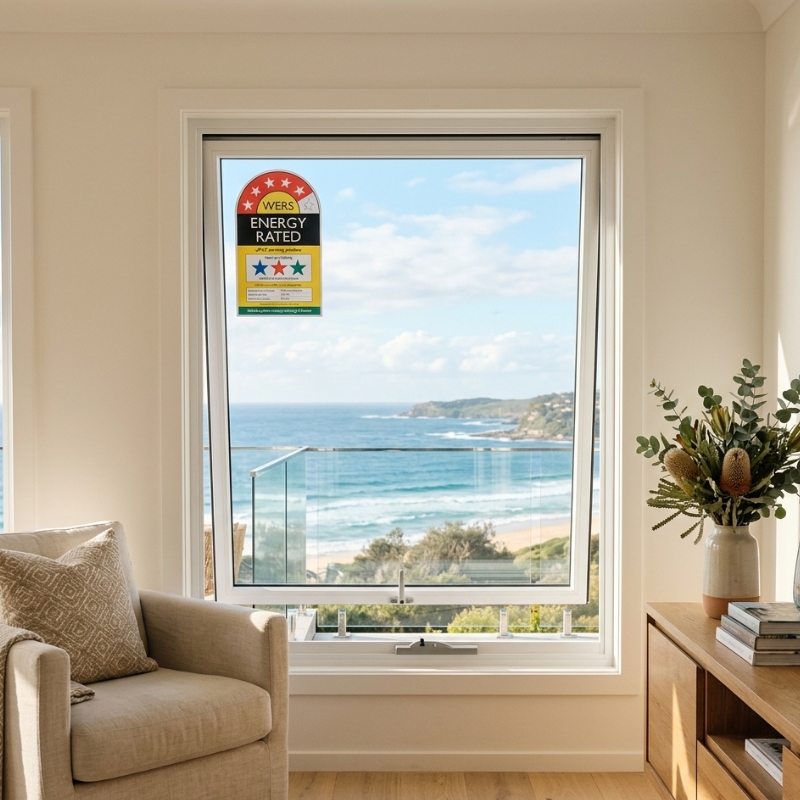
Nothing takes the excitement out of a window upgrade faster than staring at a label crammed with stars, U-values and acronyms you have never heard of. Yet those tiny numbers can make a big difference to how warm your living room feels on a winter’s night or how high your power bill climbs during a Hunter Valley heatwave. If you plan to compare modern uPVC awning windows with the tired timber or aluminium units you have now, understanding the Window Energy Rating Scheme (WERS) is your shortcut to a smarter choice. This guide breaks down the label, explains why some awning styles score better than others and shows you how to use the information when talking to suppliers or builders in New South Wales.
Why Window Energy Ratings Matter in NSW’s Climate
NSW weather covers everything from frosty mornings in the Southern Tablelands to subtropical humidity along the North Coast. That variation makes a one-size-fits-all approach risky when you are choosing new windows.
• Summer heat loads: Western Sydney routinely tops 40 °C in January. A high solar-heat-gain awning window can let in unwanted heat, forcing the air conditioner to work overtime.
• Winter heat loss: Residents in Orange or the Blue Mountains often battle single-digit daytime temperatures. Poorly performing glass leaks warmth just when you need it most.
• Rising energy prices: The Australian Energy Regulator reported a 20–25 % residential electricity price increase across several NSW distributors in 2023–24. Every extra watt of unwanted heat gain or loss shows up on the bill.
• NatHERS compliance: Approved energy ratings help architects hit star targets in BASIX or NatHERS assessments, which are mandatory for most new dwellings in NSW.
A clear WERS label helps you match the window’s performance to your postcode’s conditions instead of relying on guesswork or glossy brochures.
Decoding the WERS Label: What Each Metric Tells You
WERS condenses complex laboratory test results into a format homeowners can understand. At first glance you will see colourful stars, but the real story is in the supporting metrics shown beside them.
Below is a quick reference you can keep on your phone while shopping:
| Metric | What It Measures | Why It Matters in NSW Homes | Ideal Direction |
| U-value (Uw) | Rate of heat flow through the window (W/m²·K) | Lower Uw means less winter heat escapes and less summer heat slips inside | Lower number is better |
| Solar Heat Gain Coefficient (SHGCw) | How much direct solar radiation passes through (0–1) | High SHGC may overheat sun-drenched west-facing rooms; low SHGC benefits hot climates | Depends on orientation and climate zone |
| Visible Light Transmittance (Tvis) | Percentage of daylight that enters (0–1) | Affects natural lighting and glare; relevant for home offices and living rooms | Balanced to avoid glare yet minimise artificial lighting |
| Air Infiltration (AI) | Air leakage under pressure (L/s·m²) | Drafts raise heating/cooling loads and can cause condensation | Lower number is better |
| Energy Star Ratings (Heating & Cooling) | WERS converts the metrics into star scores (0–10) | Quick visual cue for buyers; separate heating and cooling stars help different NSW climates | More stars are better, but compare the individual metrics, too |
Understanding the Dual Star System
WERS offers separate star counts for heating and cooling because some windows excel at keeping warmth in, while others focus on blocking summer heat. A Southern Highlands home may prioritise a high heating score, whereas a Coffs Harbour renovation may lean on the cooling stars.
Star Ratings vs Real-World Performance: Common Misunderstandings
Many retailers push the highest total star count as the “best” option, but that shortcut can mislead.
- Orientation Overrides the Label
• North-facing awning windows in NSW collect abundant winter sun. A slightly higher SHGC can actually help natural heating.
• West-facing bedrooms cop harsh afternoon sun. Even a modest SHGC can lead to a sauna effect unless shading or low-e coatings are used. - Frame Conductivity Counts
An excellent piece of double glazing loses much of its advantage if the aluminium frame still acts as a thermal bridge. Frame material influences Uw just as heavily as glass choice. - Installation Quality Impacts Airtightness
WERS assumes the frame is installed per manufacturer guidelines. Poor sealing or oversized gaps can raise actual air infiltration beyond what the label suggests. - Glazing Combinations Change Everything
Add argon-filled gaps, switch to laminated panes or choose a triple-glazed unit and the star rating can jump an extra point or two. Always confirm the WERS certificate refers to the exact build-up you are purchasing.
How Frame Material and Glazing Work Together to Influence WERS
If you have come across debates about aluminium versus uPVC or timber frames, you will know that material choice affects both Uw and AI scores. For a deeper technical dive, the energy performance comparison of aluminium and uPVC frames explains why metal conducts heat more readily and how thermal breaks try to address the issue. Here is the simplified snapshot:
| Option | Typical Uw Range (Awning) | Airtightness Potential | Maintenance Impact |
| Un-thermally-broken aluminium + double glazing | 3.2–4.0 | Medium; gaskets degrade under UV | Regular seal checks, repaint if powder-coat fails |
| Thermally broken aluminium + double glazing | 2.4–3.0 | Medium | Similar upkeep; better condensation resistance |
| uPVC + double glazing | 1.6–2.5 | Low (tight fusion-welded corners) | Wipe-clean, no painting, gasket life 15+ years |
| Timber + double glazing | 1.8–2.8 | Low-medium (depends on joinery) | Periodic sealing, risk of swelling in coastal air |
The lower Uw and tighter seals typically delivered by modern uPVC frames help boost both heating and cooling stars on the same glass unit.
Reading WERS for Awning Windows Specifically
Awning windows hinge at the top and open outward, creating a small roof that sheds rain while still allowing airflow. That operation style changes a couple of rating factors:
• Gasket Compression: Awning sashes pull tight against the frame when closed, naturally improving air infiltration numbers.
• Glazing Flexibility: Awning frames can comfortably carry double or triple glazing without heavy counterweights, so you can mix and match low-e coatings and gas fills to fine-tune SHGC.
• Hardware Impact: Quality friction stays limit sash sag, ensuring the sash seals squarely over time. Cheap stays may loosen and under-cut the original WERS star score.
Matching Awning Ratings to Typical NSW Room Uses
| Room | Desired Performance Focus | Helpful WERS Indicators |
| North-facing living area | Maximise winter warmth | Higher SHGC, low Uw, 5+ heating stars |
| East-facing kitchen | Morning sun, afternoon shade | Balanced SHGC, low Uw, mid-range cooling stars |
| West-facing bedroom | Block harsh afternoon heat | Lower SHGC, low Uw, 5+ cooling stars |
| South-facing bathroom | Prevent condensation | Very low Uw and AI, moderate SHGC |
A Five-Minute DIY Check Before Comparing Labels
Before you head to a showroom, walk around your home with this mini checklist:
- Note Window Orientation
Mark which walls face north, east, south and west. Your phone’s compass app is accurate enough. - Check for External Shading
Do eaves, pergolas or neighbouring buildings shade the window? If yes, SHGC may be less critical. - Feel for Drafts
Run a lit incense stick or tissue around the frame edges on a windy day. Movement reveals high air infiltration. - Measure Frame Depth
A simple ruler will show if your existing wall cavity can accept thicker double glazing without major alteration. - Photograph Problem Spots
Snap any condensation streaks, peeling paint or cracked putty to discuss with your installer.
Armed with that context, you can interpret star ratings far more intelligently.
Seven Mistakes to Avoid When Using Energy Ratings to Choose Windows
- Chasing the highest possible stars without considering your climate zone.
- Assuming every product on display carries the same WERS certification—ask for the actual certificate.
- Ignoring installation; a 7-star window poorly fitted can perform worse than a 4-star unit installed well.
- Picking glass first and frame last—both contribute to Uw.
- Forgetting that flyscreens, security grilles or plantation shutters can affect airflow and effective SHGC.
- Over-looking future shading changes such as planned pergolas or fast-growing trees.
- Believing double glazing solves everything; condensation can still form if internal humidity stays high.
Questions to Ask Suppliers About Their WERS Data
• Does the certificate cover the exact glass, spacer and gas fill I’m ordering?
• What testing body verified these numbers?
• Have you installed similar-rated awning windows in my postcode, and what feedback have you received?
• How do you guarantee installation workmanship so the air infiltration matches the label figure?
• What maintenance is needed to preserve gasket compression over 10 years?
• Are replacement seals and hardware locally available if I need them later?
Answers to these questions separate diligent manufacturers from those quoting ratings they struggle to replicate on site.
Frequently Asked Questions
1. Is the WERS label the same as the Energy Star label on appliances?
No. WERS is a voluntary industry program run in partnership with the Australian Glass and Window Association, while the familiar Energy Star label on fridges and washing machines is regulated under the Greenhouse and Energy Minimum Standards (GEMS). WERS follows similar star graphics but focuses on window-specific metrics like U-value and SHGC rather than appliance kWh usage.
2. Can I improve my existing awning window’s rating without replacing it?
Upgrades such as secondary glazing panels, low-e retrofit films and improved weather seals can shave some heat transfer and drafts. However, they rarely match the performance of purpose-built double-glazed uPVC awnings. Evaluate the payback period carefully—sometimes full replacement delivers better long-term savings and comfort.
3. How often do WERS ratings change?
Manufacturers must recertify if they alter any element affecting performance—glass thickness, spacer type, gas fill or frame design. Industry standards also evolve periodically. When in doubt, request the most recent certificate date and version.
4. Does a higher star rating guarantee no condensation?
Lower U-values reduce the likelihood, but condensation also depends on room humidity and ventilation. Bathrooms, laundries and kitchens with poor exhaust fans can still develop moisture on even 5-star windows. Maintain adequate airflow and consider a moisture meter for ongoing monitoring.
5. Are WERS ratings recognised by NSW planning authorities?
Yes. BASIX and NatHERS assessments both accept WERS data. Presenting certificates during the design phase helps building certifiers tick compliance boxes faster and may avoid last-minute specification changes.
Wrapping Up
WERS labels take the guesswork out of matching awning windows to New South Wales’ diverse climates—provided you know how to read them. Focus on the underlying U-value, SHGC and air infiltration numbers, confirm they apply to the exact product build-up you are buying and remember that professional installation is half the performance battle. If the data still feels overwhelming, suppliers with proven experience fitting high-performing awning windows across NSW can walk you through the fine print so you end up with a window that feels as good as it looks for many summers and winters to come.


