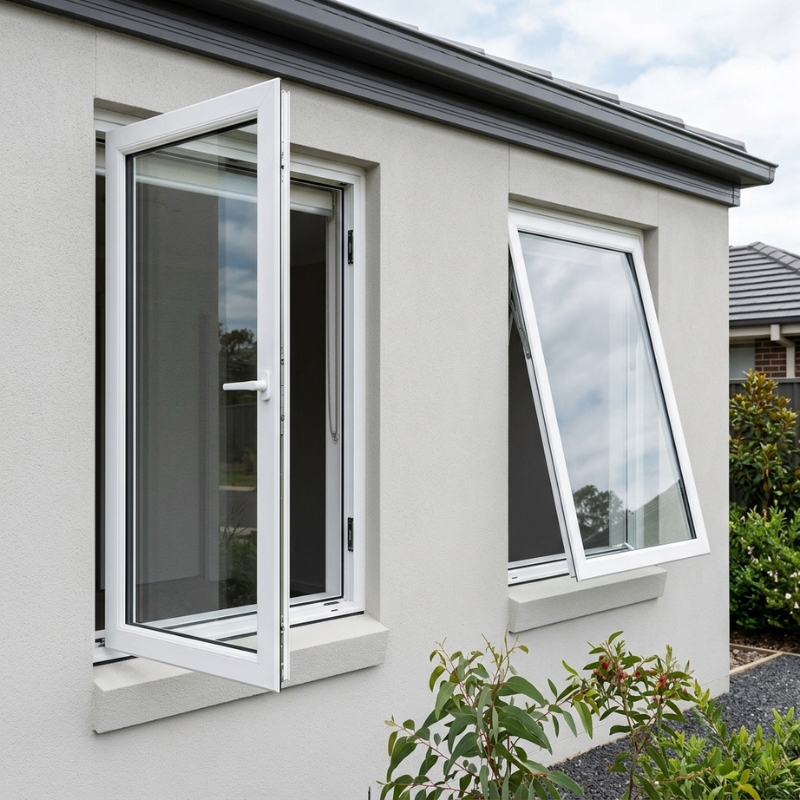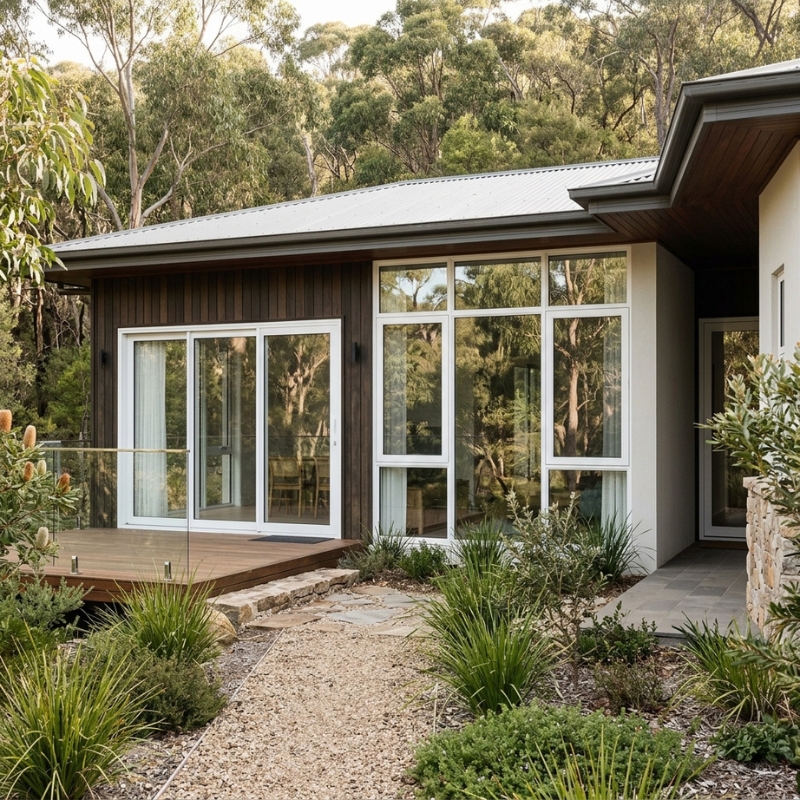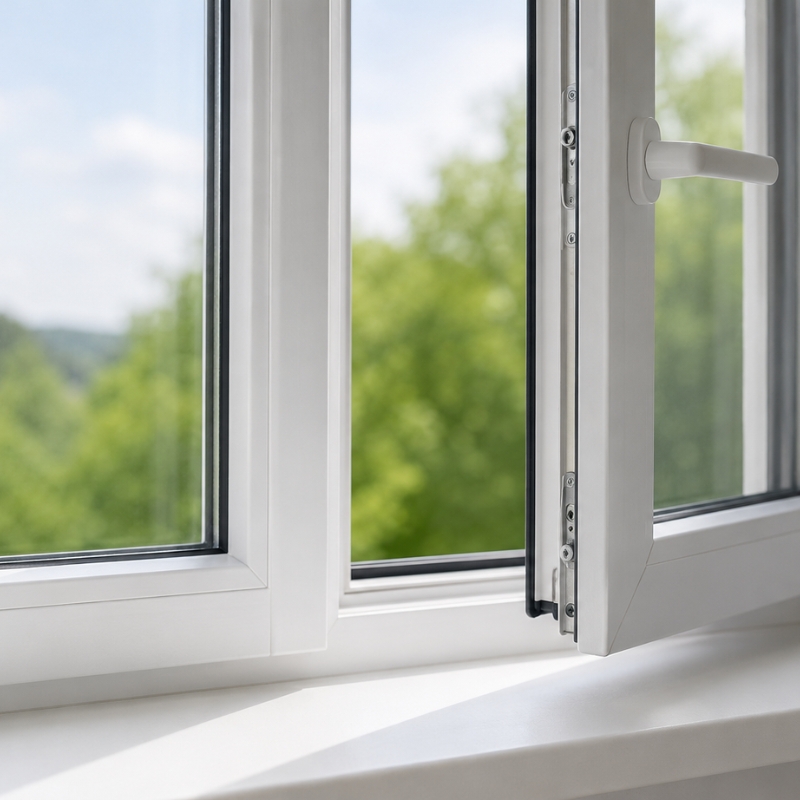
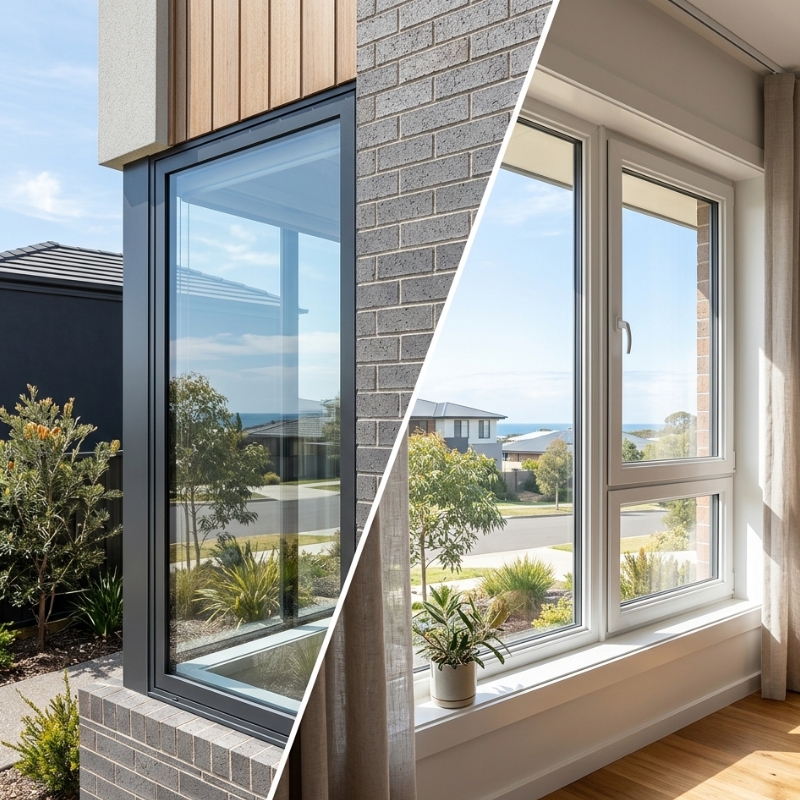
New South Wales homeowners are spoilt for choice when it comes to window materials. Yet the most common question we hear is whether modern aluminium frames or uPVC frames give better long-term value. The answer depends on more than looks or upfront price. Sydney’s humid summers, the Central Tablelands’ chilly winters and coastal salt spray all test a frame’s thermal efficiency, durability and maintenance needs very differently. This guide compares aluminium and uPVC across the measures that matter most in NSW so you can make an informed decision rather than a guess.
1. Energy Performance in the NSW Climate
Aluminium and uPVC conduct heat at very different rates, which has a direct impact on indoor comfort and energy bills.
How the Materials Behave Thermally
• Aluminium is a highly conductive metal. Without a thermal break, heat transfers quickly through the frame, which can reduce the effectiveness of double glazing.
• uPVC is a naturally low-conductivity plastic. Its multi-chamber profile traps air, forming an insulating barrier around the glass.
Typical U-values and Solar Heat Gain
Most standard, non-thermally broken aluminium frames record U-values between 5.8-6.8 W/m²K. A quality uPVC frame with double glazing can reach 1.8-2.5 W/m²K. Lower numbers mean less heat flows through the assembly, keeping summer heat and winter chill outside.
Relevance to BASIX Compliance
Since 2022, the NSW BASIX guidelines have placed tighter limits on heating and cooling loads for new homes. Builders often find uPVC frames an easier pathway to compliance because the default modelling assumptions reward lower frame conductivity. Aluminium can still comply, but usually only with thermal breaks and higher-spec glass, both of which add cost.
Energy Performance Comparison Table
| Performance Factor | Standard Aluminium Frame | Thermally Broken Aluminium | Standard uPVC Frame |
| Typical U-value (double glazed) | 5.8–6.8 W/m²K | 2.7–4.0 W/m²K | 1.8–2.5 W/m²K |
| Summer heat gain | High without a thermal break | Moderate | Low |
| Winter heat loss | High | Moderate | Low |
| Extra measures often required | Thermal break, low-E glass, heavy curtains | Low-E glass, careful sealing | Usually none beyond standard double glazing |
In most NSW climate zones, uPVC delivers stronger insulation without add-ons. Thermally broken aluminium narrows the gap but at a higher price point.
2. Maintenance Demands Over a 20-Year Span
The perfect window is one you can set and forget. That makes material-specific upkeep worth a closer look.
Aluminium Upkeep
• Needs periodic washing to prevent corrosion, especially within 10 km of the coast.
• Powder-coat can chalk over time, requiring recoating or polishing.
• Steel hardware in aluminium frames may seize if salt builds up.
• Thermal-break join lines can separate if exposed to extreme cycles of heat and cold.
uPVC Upkeep
• Requires only soapy water a few times a year.
• Colour is integral to the profile, so there is no repainting or recoating.
• uPVC is naturally resistant to salt spray, making it popular from Wollongong to Byron Bay.
• Modern UV-stabilised formulations resist fading and brittleness that older PVC profiles once suffered.
What Can Go Wrong?
Homeowners sometimes worry about plastic becoming brittle. Inferior imports without proper UV stabilisers do risk chalking and cracking, but Australian Standard AS 2047-compliant uPVC profiles have additives tested to withstand our sunlight.
3. Longevity and Structural Integrity
How long a frame lasts comes down to material fatigue, corrosion resistance and ongoing performance.
Expected Service Life
• Quality aluminium frames can last 25-35 years if finishes are maintained. Coastal environments shorten life unless marine-grade powder-coating is specified.
• Quality uPVC frames routinely last 30-40 years. European case studies show 40+ years with minimal degradation, and local projects installed in the early 2000s remain in excellent condition.
Movement and Warping
• Aluminium’s rate of thermal expansion is roughly double that of uPVC. When direct sun hits a dark-coloured aluminium frame, visible expansion can cause sealant joints to fail sooner.
• uPVC expands less and more evenly, so gaskets and seals usually stay tight for longer.
Hardware Interaction
Any frame’s life is limited by moving parts. Stainless-steel or high-quality zinc hardware is critical in coastal NSW, regardless of frame type.
4. Environmental and Sustainability Considerations
Recycling potential and embodied energy are growing decision factors for homeowners and builders alike.
| Sustainability Factor | Aluminium | uPVC |
| Embodied energy in production | Very high (smelting) | Moderate (extrusion) |
| Recyclability | Infinite if collected | Fully recyclable; current collection programs growing |
| Recycled content readily available in AU | Yes, through remelt plants | Limited but improving |
| In-service energy savings | Lower unless thermally broken | Higher due to inherent insulation |
| End-of-life collection in NSW | Established scrap metal network | Fewer collection points, but European-style programs emerging |
uPVC’s lower manufacturing energy and stronger in-use efficiency offset its still-maturing recycling ecosystem, especially when electricity prices are factored into lifetime carbon.
For a deeper dive into the environmental case for uPVC, see why uPVC window framing is a smart choice.
5. Common Mistakes to Avoid When Selecting Frames
Even the best material can underperform if specified or installed incorrectly.
Overlooking Thermal Breaks in Aluminium
Many builders assume double glazing alone solves insulation. Without a thermal break, aluminium can still conduct heat around the sealed unit.
Importing Non-compliant uPVC Profiles
Low-cost imports lacking UV stabilisers or correct wall thickness can yellow or warp in western NSW heat.
Skipping Hardware Upgrades
Salt-resistant hinges, locks and fixings add a small premium yet make a big difference near the coast.
DIY Measurement Shortcuts
A 2 mm mis-measure creates air leaks and water ingress. Professional site measurement avoids expensive refits.
6. Decision Framework: Which Frame Best Fits Your NSW Home?
| Key Question | Choose Aluminium If… | Choose uPVC If… |
| Thermal efficiency is the top priority | You are willing to invest in thermally broken frames and low-E glass | You want strong insulation straight away |
| A sleek, slim profile matters most | You prefer narrow sightlines and accept slightly higher energy use | You are happy with a marginally thicker but more efficient profile |
| You live within 1 km of breaking surf | You are prepared to specify marine-grade coatings and rinse monthly | You value salt resistance without special coatings |
| You plan to repaint frames to match new décor | You are comfortable with periodic recoating or powder-coating | You prefer low-maintenance, colour-through profiles |
| Budget is tight but lifetime savings matter | Standard aluminium may save upfront but cost more in energy | Standard uPVC can offset slightly higher initial cost through bill savings |
Practical Tip
Ask suppliers for whole-window Uw-values, not just glass centre-pane numbers. This captures the frame’s real thermal impact.
7. Questions Homeowners Should Ask Their Supplier
- Is the frame system independently tested to AS 2047?
- What is the documented Uw-value for my chosen glass and frame combination?
- Which hardware materials are supplied as standard and are they upgradeable?
- What maintenance does the warranty require in a coastal postcode?
- Can you provide recent NSW project references that prove long-term performance?
These questions help you judge product quality beyond sales brochures.
8. FAQs
1. Do aluminium frames always need a thermal break in NSW?
A break is not mandatory, but without it, most aluminium windows struggle to meet BASIX energy targets, especially in climate zones 4 and 5. Thermally broken options lift performance but narrow the price gap with uPVC.
2. Will modern uPVC frames fade in the harsh Australian sun?
Quality uPVC contains titanium dioxide UV stabilisers. Independent testing shows colour retention above 8 on the grey scale after simulated decades of exposure. Cheap imports without stabilisers are the usual culprits when fading occurs.
3. Which frame copes better with bushfire risk?
Both can meet BAL-29 with the right glass and seals. Aluminium tolerates surface heat, while uPVC relies on self-extinguishing additives. Check each system’s BAL test certificate rather than assuming one is safer across the board.
4. Can I mix aluminium doors with uPVC windows?
Yes. Many architects specify uPVC for fixed and casement windows where insulation is critical, then use slimline aluminium for large sliders where structure and narrow sightlines matter.
5. Is there a big resale difference between aluminium and uPVC?
Buyers mainly care about energy efficiency, ease of maintenance and how the frames look within the façade. Well-installed examples of either material rarely hurt resale; neglected powder-coat or faded PVC can.
Final Thoughts
Aluminium and uPVC both have a place in New South Wales homes. Aluminium offers slim aesthetics and proven recyclability, while uPVC delivers leading insulation and low upkeep straight out of the box. Focus on verified AS 2047 compliance, documented Uw-values and appropriate hardware for the coast or inland areas. If you still tussle with the trade-offs, professional advice and a product demo can highlight how each frame option feels and functions before you commit.