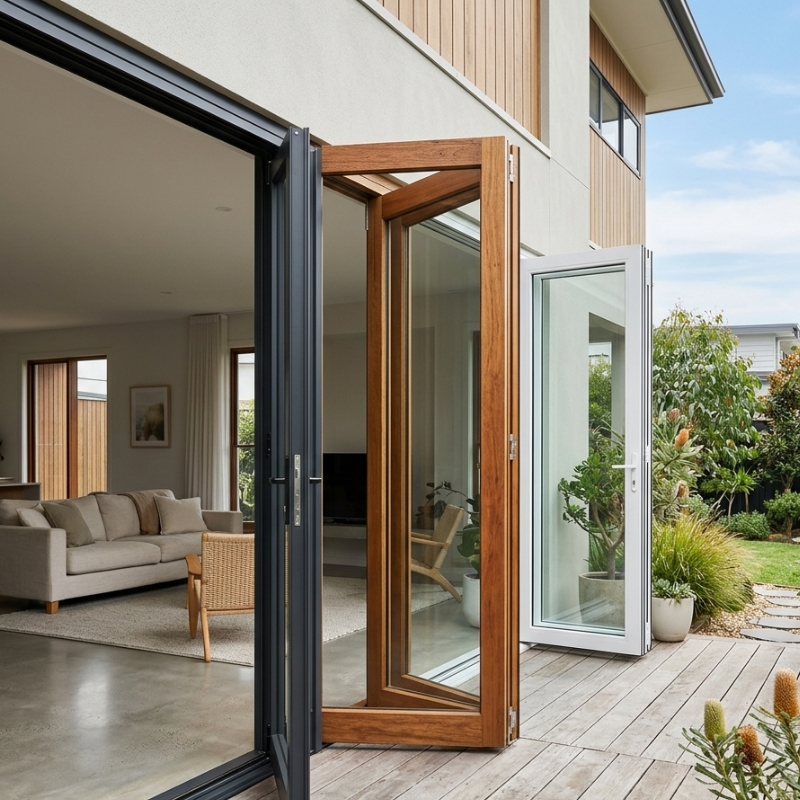
Across New South Wales, bi-fold doors have become an almost default upgrade whenever a renovation brief mentions “indoor-outdoor flow”. The profile material you choose—aluminium, timber or uPVC—sets the tone for years of cleaning, repairs and energy costs. Below is a practical look at how each option copes with coastal salt spray, bushfire risk and the baking summer sun that define the state’s climate.
A quick disclosure before we start comparing: bi-fold configurations vary from two large panels to walls of ten leaves. Hardware quality, installer skill and the glass specification all influence performance, yet the frame material remains the single biggest driver of maintenance workload and lifespan. If you are weighing up possibilities, bookmark the details now so you are not surprised by recurring chores later.
Early in the decision process it helps to see an example system in person. Our showroom’s uPVC bi-fold doors demonstrate how modern profiles look and feel when fully open, partially stacked or locked tight against a southerly.
How the NSW Climate Tests Each Material
New South Wales delivers everything from Illawarra sea spray to the dry, dust-laden westerlies that hit inland towns. Three stress factors dominate:
- UV intensity fading paints and finishes.
- Moisture swings causing expansion, contraction and potential leaks.
- Corrosive salt-laden air eating into unprotected hardware and frames.
Aluminium’s baked-on powder coat handles UV better than most paints, yet the metal conducts heat quickly. On a 38 °C January afternoon the frame can exceed 70 °C, softening standard gaskets and drying out lubricants. Timber copes with temperature extremes by moving: it swells during humid weeks and shrinks under a hot, dry northern wind. Movement opens gaps that invite water and termites unless finish coats stay intact. uPVC, a rigid vinyl blend stabilised for Australian UV, neither corrodes nor absorbs moisture, so movement remains minimal.
Maintenance Demands at a Glance
| Task | Aluminium | Timber | uPVC |
| Wash frame & tracks | Every 2-3 months near the coast; 4-6 months inland | 2-3 months; grain holds dirt | 4-6 months, hose and mild detergent |
| Re-seal or re-paint exterior | Not required; touch-up chips only | Full sand and coat every 3-5 years (sooner on north-west elevations) | Never; colour baked into profile |
| Lubricate hinges & rollers | 6 monthly to slow galvanic corrosion | 6 monthly | 12 monthly; hardware same cycle but frame unaffected |
| Adjust panels for movement | Rare once set | Likely after humid summers and dry winters | Rare; thermal expansion low |
| Replace weather seals | 8-10 years | 6-8 years (movement accelerates wear) | 10-12 years |
| Expected service life (frame) | 25-30 years if coated correctly | 15-25 years depending on finish discipline | 35-40 years; recyclability high |
The table flags one subtle truth: most maintenance time goes into preserving the frame’s original dimensions and finish. When the frame stays stable, glass seals and hardware live longer. uPVC’s “set and forget” benefit shows up clearly here.
Longevity, Warranties and Hidden Costs
As homeowners chase 7-Star NatHERS ratings, doors must stay tight for several decades, not just look good on handover day.
Aluminium frames last longest when buyers choose a coastal-grade powder-coat (Class 2 or higher) and stainless steel hardware. Both upgrades add upfront cost. Homeowners comparing materials often ask, do uPVC bi-fold doors seal better than aluminium, particularly when weighing long-term durability, weather resistance and maintenance. Skip the upgrades and expect pitting within five years east of the Princes Highway. Internal reinforcing and drainage lines often hide galvanised or zinc-plated steel; once rust sets in, the frame tinges brown at mitred corners.
Timber can outlast aluminium if two conditions hold: species selection (Merbau, Blackbutt, Western Red Cedar) and a religious finishing schedule. Allow one summer without re-oiling and hairline cracks open pathways for moisture, leading to rot behind the joinery where you cannot sand it out. Termite barriers and annual inspections become part of ownership.
uPVC relies on stabilisers mixed into the resin. Early 1990s imports yellowed because the formulation was tuned for European light levels. Australian-made profiles now include high-impact modifiers and advanced UV absorbers. Independent tests at the Queensland Suntest facility showed colour shift of less than ΔE 1.5 over a simulated 15-year cycle. Most reputable manufacturers offer a 10-year colour fastness warranty and 20-25 years on the profiles themselves.
When assessing quotes, compare the fine print on inclusion of labour for warranty call-outs. Aluminium suppliers sometimes limit coverage to replacement parts only, leaving service call fees in the owner’s lap. Timber suppliers rarely include labour after two years because repainting is considered routine upkeep. uPVC contracts tend to remain all-inclusive for the first decade, reflecting the lower likelihood of remedial work.
Practical Upkeep Tips Specific to NSW
Coastal owners in Wollongong, Cronulla and Port Stephens can halve corrosion risk by installing nylon brush seals over exposed hinges to catch wind-blown sand before it grinds the bearing pins.
In bushfire-prone Blue Mountains or Southern Highlands zones, check the BAL rating of your chosen system. Powder-coated aluminium meets BAL-40 with thicker glass and seals, while uPVC needs aluminium sub-frame inserts to satisfy BAL-29. Regardless of material, clear the sill of leaf litter—embers often ignite dry eucalypt debris caught between tracks, not the frame itself.
Sydney’s water restrictions sometimes discourage hosing down joinery. A soft bucket wash with pH-neutral car shampoo keeps warranties intact. Avoid solvent-based cleaners: they haze uPVC and lift powder-coat gloss.
Country NSW homes contend with red dust drifting up from paddocks. On windy weeks in Dubbo and Tamworth, close blinds during the day; UV-heated dust sticks to warm frames. An evening rinse with cool water removes it before it cakes hard.
For apartments where body corporate approvals drag on, retrofit trickle vents can relieve condensation without breaching façade rules. Pick vents with replaceable insect screens to stop midges around the Clarence River.
Choosing Between the Three Materials
Every home carries its own cost-benefit equation, yet a few broad patterns emerge:
- Select aluminium when slim sight-lines matter more than thermal control and you have the discipline (or budget) for coastal-grade coatings.
- Lean toward timber if heritage overlays require it and you are comfortable sanding on a long weekend every few years.
- Choose uPVC for low-touch living, especially if energy savings, noise reduction and colour stability rank high.
The NSW Government’s guidance on sustainable glazing confirms that non-conductive frames noticeably improve whole-wall U-values, cutting heating loads in the Central Tablelands by a measurable margin. Review the official summary here: NSW Government advice on energy-efficient home design.
A final note on aesthetics: colour palettes for uPVC have expanded well beyond plain white. Laminated foils now emulate matte Monument or textured American Oak. Before dismissing uPVC on style grounds, view current samples in daylight; the grain embossing surprises many architects who last checked a decade ago.
Most door systems can serve faithfully for decades if owners respect their material limits. Understanding how NSW’s varied climate challenges aluminium, timber and uPVC lets you plan upkeep realistically, avoiding the shock of unbudgeted repairs. Make the call that suits your lifestyle rhythm, not just the showroom gloss level, and your bi-fold doors will continue to frame sunsets rather than maintenance invoices.