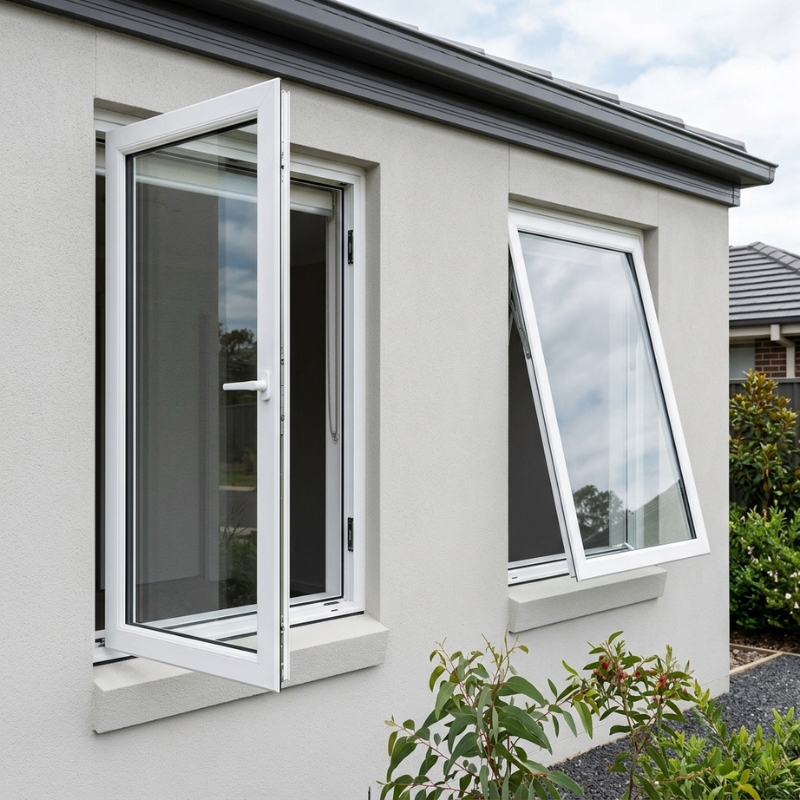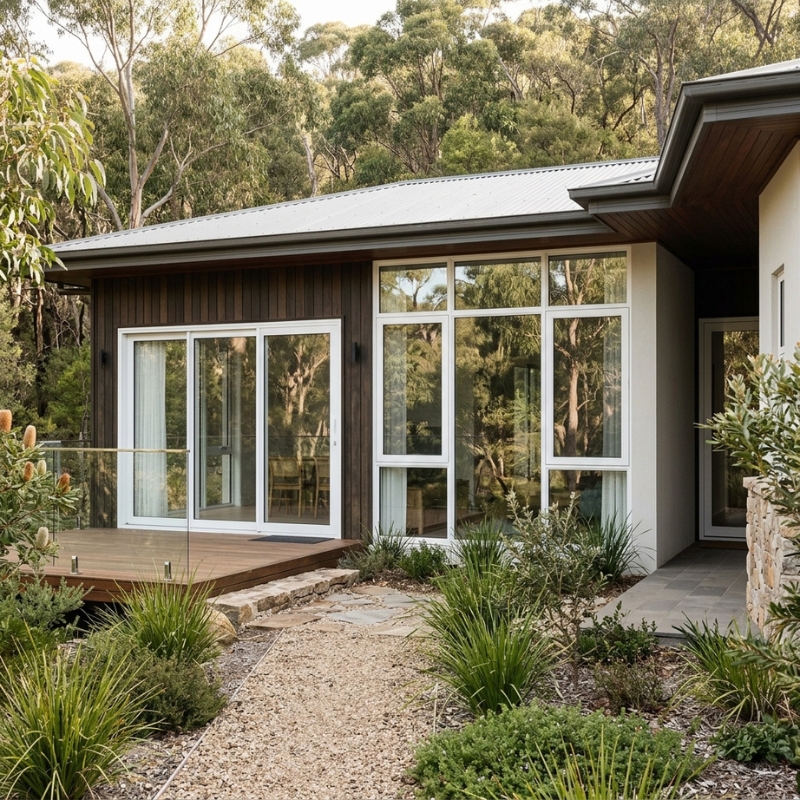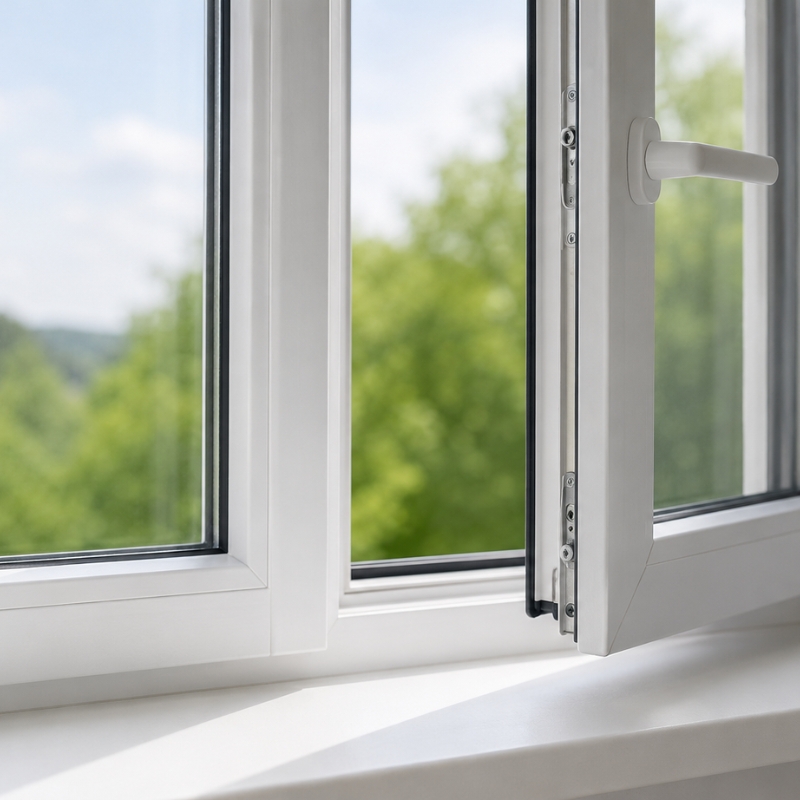

Summer storms that feel tropical one week, crisp mountain air the next, and a bushfire season looming every spring. New South Wales throws plenty at a window frame. Home-owners comparing options tend to narrow the shortlist to two contenders soon enough: modern uPVC and powder-coated aluminium. Both promise slim sight-lines and a long service life. But the way they respond to heat, to salt spray and to fire ratings is very different. If you want glazing that still shuts snugly after ten years of expansion and contraction, it pays to look past first impressions. Below we unpack the strengths and the compromises of each, so you can work out whether uPVC windows and doors or aluminium will serve you better in 2026 and beyond.
NSW’s Climate Pressure Points
Most Australian climate guides lump NSW into a broad “temperate” or “hot-summer” zone. Locals know the real picture is messier than that.
- Rapid temperature swings. Western Sydney regularly jumps from single-digit mornings to the mid-30s by afternoon, and that daily cycling stresses frame seals and hardware.
- Corrosive coastal air. Salt-laden breezes from the Illawarra to the Mid-North Coast pit finishes and attack fixings.
- Bushfire exposure. Ridges around the Blue Mountains and the Central Coast now require BAL-29 or BAL-40 compliant openings.
- Humidity bursts. February storms can push indoor humidity above 70%, which encourages condensation around a poorly insulated frame.
A frame worth buying keeps internal temperatures stable, keeps moisture from building up, stands firm against ember attack, and asks for very little upkeep in return.
Performance Face-Off
Here’s how today’s premium uPVC and thermally-broken aluminium frames handle those pressures.
| Factor | 2026-spec uPVC | 2026 Thermally-Broken Aluminium |
| Native thermal value (frame) | Approx. 1.2 W/m²·K | Approx. 3.0 W/m²·K |
| Typical whole-window U-Value with double glazing | 1.6 to 1.9 W/m²·K | 2.6 to 3.0 W/m²·K |
| Condensation resistance | High. Frame temperature stays close to room temp | Moderate. Frame can sit 6 to 8 °C cooler than the room |
| Expansion and contraction movement | Higher. uPVC expands roughly 2 to 3 times more than aluminium, which is why internal steel reinforcement matters | Lower. Aluminium is dimensionally steadier and stiffer |
| Bushfire ratings available | Deemed-to-satisfy up to BAL-29 with metal reinforcement. BAL-40 needs a system tested to AS 1530.8.1 | Metal is permitted at the higher levels with approved seals and toughened glass |
| Acoustic performance (Rw) | 34 to 40 dB with 6/12/6 IGU | 32 to 38 dB with the same IGU |
| Frame finish longevity | Colour bonded into the profile; no repainting | Powder-coat may chalk after 10 to 12 years in coastal sun |
| Maintenance | Wash with mild detergent | Wash, plus periodic hardware lubrication to limit galvanic corrosion |
| Indicative purchase price* | Similar for standard sizes; about 10% more for custom curves | Base price similar; thermally-broken models 15 to 25% more |
*Pricing varies with glass spec, hardware and opening style, but it sits within a few hundred dollars per square metre for most like-for-like quotes in NSW.
Thermal edge
uPVC’s low conductivity keeps the inner surface close to the indoor temperature, which cuts the risk of the midnight condensation that ruins reveals and flooring. Aluminium counters with an insulating polyamide bridge. Even so, the metal either side of that break still moves heat faster than a solid uPVC profile does.
Stability under heat
This is where aluminium has the edge, and it’s worth being straight about it. uPVC has a higher coefficient of thermal expansion than aluminium, roughly two to three times higher, so a uPVC profile moves more across a temperature swing, not less. Which is precisely why quality systems run steel reinforcement through the profile. It carries the structural load and it restrains that movement. Dark colours absorb more heat again, so they need more care still. Aluminium is stiffer and dimensionally steadier, and that’s also why it spans larger openings. What matters in practice is that the system is engineered for the movement, with reinforcement, welded corners and a proper expansion allowance at install.
Bushfire compliance
Under AS 3959, a uPVC frame has to carry metal reinforcement to comply at all. Plain uPVC doesn’t qualify. With the reinforcement in place, uPVC is deemed-to-satisfy up to BAL-29, which covers a great many NSW blocks. Go above that, into BAL-40 or Flame Zone, and you need a complete window system independently tested to AS 1530.8.1. Only some uPVC systems have been. Aluminium is metal, so it’s permitted at the higher levels with the right seals, toughened glass and screening. Reputable suppliers list the reinforcement on the specification sheet. Skip any quote that leaves it out.
Acoustic control
Dense uPVC dampens low-frequency traffic drone a little better than hollow-section aluminium. The gap looks small on paper. It can still be the margin between hearing the 4 am garbage truck and sleeping straight through it in suburban Newcastle.
For a deeper dive into glazing efficiency, our mid-year article on whether uPVC sliding doors deliver genuine energy savings breaks down IGU make-ups and spacer technology.
Cost and Maintenance Reality
Sticker prices have narrowed over the past three years, because bulk resin and billet contracts both rose with global energy costs. The real cost gap shows up after installation, not at the quote.
Re-finishing
uPVC colour is extruded into the profile, so a scratch stays the same tone as everything around it. Aluminium powder-coat can chip through to bare metal, especially where tradies rest their ladders. Re-coating a full set of sliding door frames tops a few thousand dollars once scaffolding goes into the sum.
Hardware life
Salt air acts as an electrolyte, and wherever dissimilar metals meet it drives galvanic corrosion. So lock bolts on aluminium want regular lubricant in coastal Wollongong or Port Stephens. uPVC runs the same stainless or zamak hardware, but the frame around it is inert, which slows the surface bloom.
Energy bills
Swapping 1990s aluminium frames for modern uPVC makes a real dent in heating energy. How big a dent depends on the house, the climate zone, and how you actually live in the place, so treat any single headline percentage with caution. Thermally-broken aluminium can get close to the same result, though it costs more upfront to do it.
Resale perception
Buyers once linked uPVC with cheap plastic. The association now is European performance, and home energy reports list it as a positive. Whether that translates into a faster sale is harder to pin down. But a house that feels warm at a July open inspection is doing itself no harm at all.
Making the Call for Your Project
If your priority is a frame that shrugs off condensation, insulates year-round and rarely asks for attention, uPVC currently holds the advantage in NSW. Aluminium still wins on pure slim-line aesthetics, and its higher structural strength lets it carry larger panes, which appeals to owners chasing an uninterrupted harbour view. The smartest path is usually to match the frame to the exposure. uPVC for bedrooms and south-facing living areas, where comfort is the whole point. Thermally-broken aluminium for wide stacker doors under a covered alfresco span.
Before you sign any quote, cross-check the whole-window U-Value on the WERS certificate, not just the glass. Planning rules across NSW increasingly reference those numbers, and the Australian Government’s energy.gov.au household guide shows how they feed into NatHERS scores. Get a clear view of performance, maintenance and cost over time, and you can choose frames that hold up against whatever NSW weather throws at them in 2026.