If you’ve come across tilt and turn windows and wondered what all the fuss is about, you’re not alone. They look like a standard window but do something clever, and once you understand how they work, it’s easy to see why they’re so popular in apartments and modern homes. At uPVC Windows Expert, we make uPVC tilt and turn windows for homes across NSW, and this guide explains how they work and how they compare with standard casement and sliding windows on ventilation, security, insulation and cleaning, so you can decide whether they’re right for your rooms.
| Quick answer
A tilt and turn window has two actions from one handle: tilt the top inward for secure trickle ventilation, or turn the whole sash inward like a door for full opening and easy cleaning. Compared with standard windows, it offers better ventilation control, a tighter multi-point seal for insulation and noise, and simple inside cleaning, ideal for NSW apartments and homes. |
How do tilt and turn windows work?
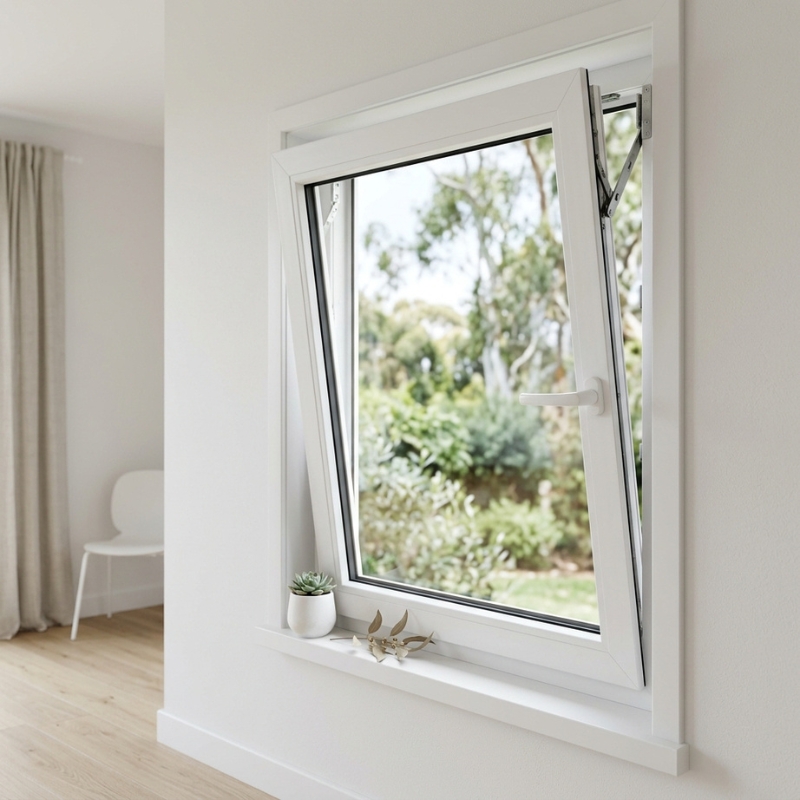
The clever part of a tilt and turn window is that a single handle controls two completely different opening actions, depending on how far you turn it. Turn the handle one way and the window tilts inward at the top, opening a gap along the top edge while the bottom stays fixed, which gives you secure, draught-free ventilation, perfect for letting fresh air in without opening the window fully or creating a security risk. Turn the handle further, and the same window swings fully inward from the side, like a door, opening the whole sash into the room for maximum airflow and, very usefully, easy access to both sides of the glass for cleaning. It sounds complex, but in use it’s simple and intuitive: a small turn to tilt for everyday air, a bigger turn to open right up. That flexibility from one handle is the heart of the design.
How do tilt and turn windows compare with standard windows?
Set against standard casement and sliding windows, tilt and turn windows have some distinct advantages, though standard styles have their place too. Here’s how they stack up:
| Tilt and turn | Casement | Sliding | |
| Ventilation | Tilt for trickle air or turn for full | Swings wide for full airflow | Opens across part of the width |
| Sealing | Tight multi-point seal all round | Good seal when closed | Slides, so a lighter seal |
| Cleaning | Both sides from inside | Reach outer glass when open | Panels can be trickier outside |
| Security | Multi-point locking, secure tilt | Multi-point locking | Multi-point locking available |
| Opens inward | Yes | No, opens outward | No, slides sideways |
The stand-out differences are the tilt option for secure everyday ventilation, the tight all-round seal, and being able to clean the outside from indoors, which matters on upper floors. A uPVC casement window option remains a great choice where a simple outward-opening window suits.
What are the comfort and security benefits?
Beyond the neat operation, tilt and turn windows bring real comfort and security benefits. On security, the tilt position lets you leave a window open for air while it stays locked in place and difficult to open from outside, so you can ventilate a room safely, even overnight or when you’re out, in a way a wide-open standard window can’t match. The multi-point locking that engages when the window is closed pulls the sash tightly into the frame at several points, which is both secure and excellent for sealing. That tight seal is where the comfort comes in: it minimises draughts and, paired with double glazed windows and doors, delivers strong insulation and noticeable noise reduction, keeping rooms comfortable and quiet. For homes on busy streets or in warmer or colder pockets of NSW, that combination of a secure tilt for air and a tight seal for insulation is genuinely useful day to day, which is a big part of why tilt and turn windows have such a loyal following.
Where do tilt and turn windows work best?
Tilt and turn windows suit almost any room, but they truly come into their own in a few situations. Apartments and units love them, because the inward-opening sash means you can clean both sides of the glass safely from inside, with no leaning out over a balcony or the street, which is a real advantage on upper floors. That same benefit makes them ideal for any upper-storey or hard-to-reach window in a house. Bedrooms are another natural fit, since the secure tilt lets you sleep with fresh air coming in while the window stays locked and safe. They also suit anyone who values controllable ventilation and a quiet, well-sealed room, such as homes near busy roads. If you want one window style that ventilates flexibly, seals tightly, locks securely and cleans easily, tilt and turn is hard to beat, and we’re happy to advise where they’ll add the most value in your home.
Frequently asked questions
How do tilt and turn windows work?
A single handle controls two actions. Turn it one way, and the window tilts inward at the top for secure ventilation; turn it further and the whole sash swings inward like a door for full opening and easy cleaning. A small turn gives everyday air, a bigger turn opens it right up, all from one handle.
Are tilt and turn windows more secure?
They can be very secure. The multi-point locking pulls the sash tightly into the frame at several points when closed, and the tilt position lets you ventilate while the window stays locked and hard to open from outside. That means you can leave a room airing safely, which a wide-open standard window doesn’t allow.
Are tilt and turn windows worth the extra cost?
For many homeowners, yes. You’re paying for flexible ventilation, a tight seal for insulation and noise, secure airing and easy inside cleaning, especially valuable in apartments and upper floors. Whether the extra is worth it depends on your rooms and priorities. We’ll help you weigh it up when we quote for your home.
Can you clean tilt and turn windows from inside?
Yes, and it’s one of their best features. Because the sash swings fully inward like a door, you can reach and clean both the inside and outside of the glass from indoors, with no leaning out. That makes them ideal for apartments and upper-storey windows, where cleaning the outside is otherwise awkward or unsafe.
Final thoughts
Tilt and turn windows take a familiar shape and add genuine flexibility: secure ventilation from a tilt, full opening from a turn, a tight seal for insulation and noise, and easy cleaning from inside. Against standard windows, that versatility is what wins people over, especially in apartments, upper floors and bedrooms. If that sounds like what your rooms need, book a free measure and quote for uPVC tilt and turn windows and we’ll advise where they’ll work best.