Someone has quoted you uPVC windows, a mate or a builder has called it “just plastic”, and now you are wondering whether that is a reason to walk away. Let me give you the straight answer rather than a sales pitch: yes, uPVC is a plastic. There is no point pretending otherwise. But the useful question is what kind of plastic it is, and once you know that, the “just plastic” objection mostly answers itself. uPVC Windows Expert has been supplying and installing uPVC windows and doors across New South Wales for 25+ years, and this article takes the objection head-on: what uPVC actually is, whether the common complaints hold up, where it genuinely beats aluminium and timber, and how to judge a frame rather than the material name.
Yes, uPVC is a plastic: unplasticised polyvinyl chloride. The unplasticised part is what matters, because without the plasticisers that make plastic flexible, the material is rigid and holds its shape. That is why it is used for window frames, and why the quality of a uPVC window depends on the chamber count, the steel reinforcement and the profile depth rather than on the material name.
What uPVC actually is
uPVC stands for unplasticised polyvinyl chloride, and the whole answer to the “just plastic” question is hidden in that word “unplasticised”. It is worth unpacking, because it is the difference between the plastic people picture and the material your frames are actually made from.
PVC, polyvinyl chloride, is the same base material used for things like water and drainage pipework, which tells you something straight away: it is already a material trusted for jobs that demand durability and holding shape under pressure. The “plasticised” versions of PVC have additives called plasticisers mixed in, and those are what make a plastic soft, flexible and bendy; think of a flexible hose or a soft cable sheath.
uPVC has those plasticisers left out, which is the entire point. Without them, the material is rigid and hard rather than soft and flexible, so it holds its shape and does not sag, flex or deform under normal conditions. That rigidity is exactly what you want in a window frame, which has to stay square and true, carry the weight of glass, and keep its shape through years of heat and weather. So when someone calls it plastic, they are right, but the kind of plastic it is, a rigid, shape-holding, pipework-grade material, is nothing like the flimsy plastic the word brings to mind.
The three objections, answered
There are three objections people usually have to uPVC, and the honest thing to do is take each one seriously rather than brush it off, because a couple of them have some basis in older product.
Does it go brittle and yellow? This one has a grain of truth, but it is about age, not uPVC itself. Early generations of uPVC could discolour over years of harsh sun, which is where the reputation came from. Modern profiles are made with UV stabilisers specifically to resist that, so today’s product holds its colour and condition far better than the material people remember from decades ago. The objection is really about the old product, not the current product.
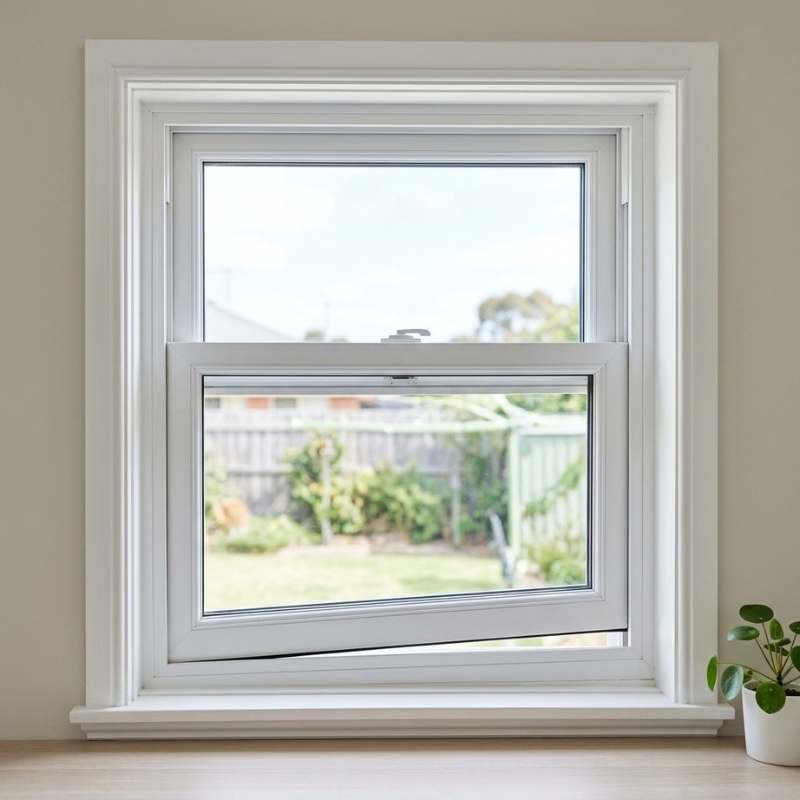
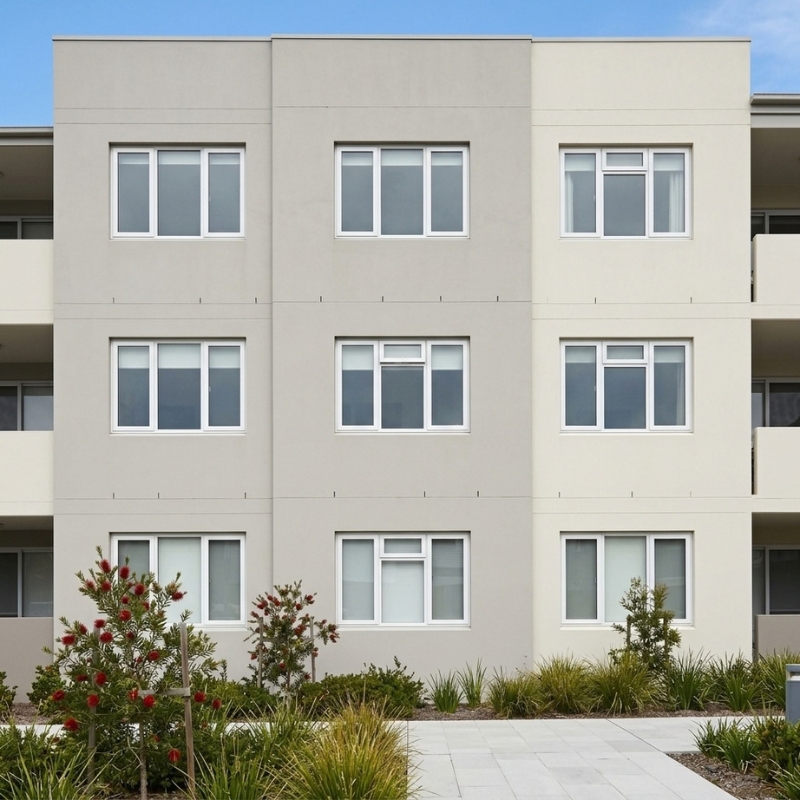
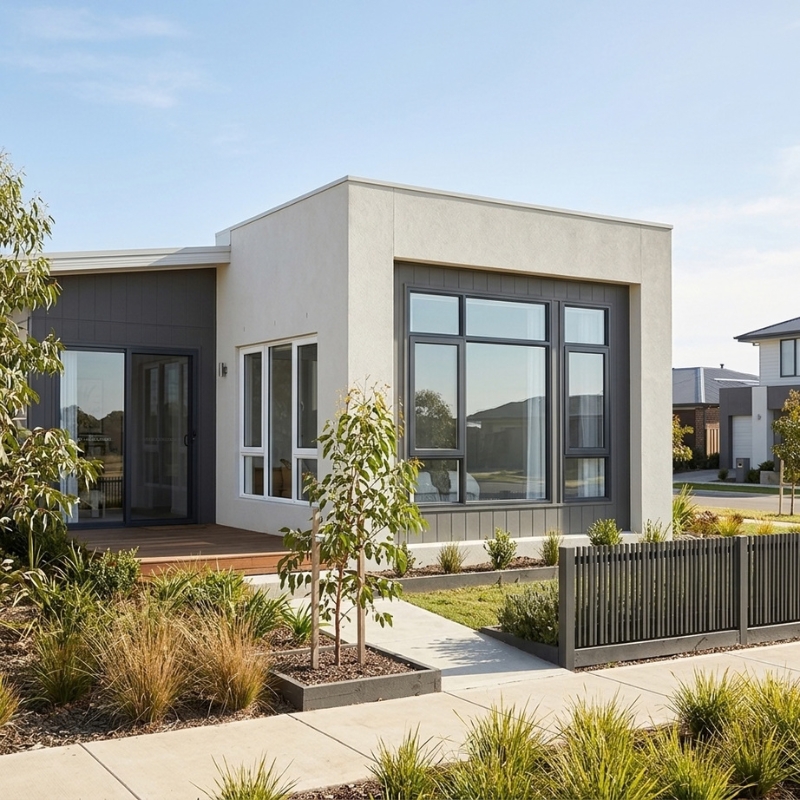
Does it look cheap? This is a fair concern if your mental image is dated, chunky white frames. Modern uPVC comes in a wide range of finishes, colours and slim profiles, so it no longer has to look like the budget product of the past. Whether it looks cheap comes down to the quality of the specific frame and finish, not the material as a category.
Is it bad environmentally? People assume plastic automatically means poor environmental standing, but it is more nuanced. uPVC is a long-lived material, so a frame lasts a long time before it needs replacing, and it can be recycled rather than simply discarded. Its strong thermal performance also means the window helps reduce a home’s heating and cooling energy use over its life. None of that makes it perfect, but the blanket “plastic is bad” reasoning does not really hold up here.
Where uPVC genuinely beats aluminium and timber
Set against the two main alternatives, uPVC has some clear, specific advantages, and it is worth being precise about where it wins rather than claiming it wins everywhere.
The biggest is thermal performance. uPVC does not conduct heat readily, so a uPVC frame insulates far better than aluminium, which conducts heat easily and can let warmth pour out in winter and in summer. On insulation, uPVC is in a different league from aluminium.
The second is no painting. Unlike timber, which needs regular sanding, sealing and repainting to keep it protected and looking good, uPVC needs no painting and very little upkeep beyond a wipe down. Over the life of the window, that is a real saving in time and maintenance.
The third is salt-air corrosion, which matters a great deal in coastal New South Wales. uPVC does not corrode, so it stands up to salt air far better than materials that can, making it well suited to coastal homes. Our uPVC windows and doors across NSW are chosen by a lot of coastal homeowners for exactly this reason.
Where uPVC does not automatically win is span. On a very large opening, a plain uPVC frame may not be stiff enough on its own, which is why a large unit uses steel reinforcement or a composite frame to carry the span. It is not a weakness so much as a design consideration for big openings.
How to judge a uPVC frame rather than the material
Here is the shift in thinking that actually helps you buy well: stop judging “uPVC” as a single thing and start judging the specific frame in front of you. Two uPVC frames can be very different products, and three things separate a good one from a cheap one.
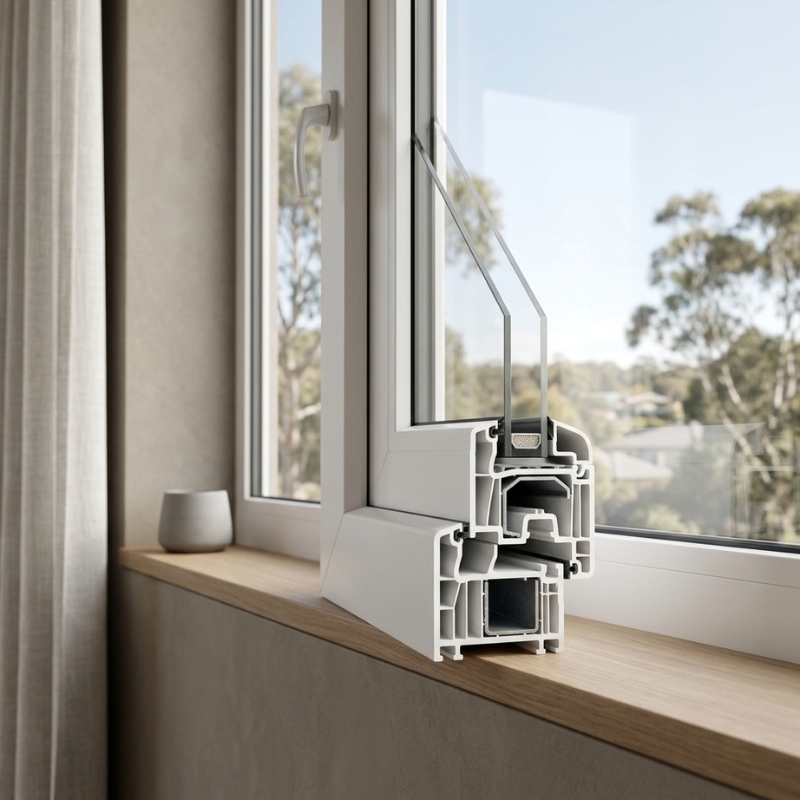
The first is chamber count. A uPVC frame is not solid; it has hollow internal chambers running through it, and those chambers are what trap air and provide insulation. More chambers generally mean better thermal performance, so the chamber count tells you a lot about how the frame will perform.
The second is steel reinforcement. Quality frames have steel inside the uPVC to add rigidity and strength, particularly important on larger units, so ask whether and where the frame is reinforced.
The third is profile depth. A deeper profile has more room for chambers and reinforcement and generally makes for a stronger, better-insulating frame, so a deeper section is usually a sign of a better product. When you compare frames on these three things, our uPVC window frames make a lot more sense than they do judged by the word “plastic” alone.
Judge the frame, not the word
So yes, uPVC is plastic, and no, that is not a reason to say no. It is a rigid, pipework-grade material that holds its shape, insulates far better than aluminium, needs none of timber’s upkeep, and shrugs off salt air. The old complaints about yellowing and cheap looks are really about product from decades ago, not what is made today. The thing that actually decides whether a uPVC window is good is the frame itself, its chamber count, its reinforcement and its profile depth, not the name of the material. Book a free measure, and we will show you the profile section so you can see what is inside the frame.
Frequently Asked Questions
Does uPVC go yellow over time?
Older uPVC could discolour under years of harsh sun, which is where the reputation came from. Modern profiles are made with UV stabilisers to resist exactly that, so today’s product holds its colour far better than the dated frames people tend to picture when they ask.
Is uPVC recyclable?
Yes, uPVC can be recycled rather than simply thrown away, which is part of why its environmental standing is better than the blanket “plastic is bad” assumption suggests. It is also a long-lived material, so a frame lasts a long time before recycling ever comes into the picture.
Is uPVC stronger than aluminium?
Not in stiffness. Aluminium is stiffer, which is exactly why uPVC frames are reinforced with steel to carry larger spans. Where uPVC clearly wins is insulation, since it does not conduct heat the way aluminium does, so it holds a room’s temperature far better.