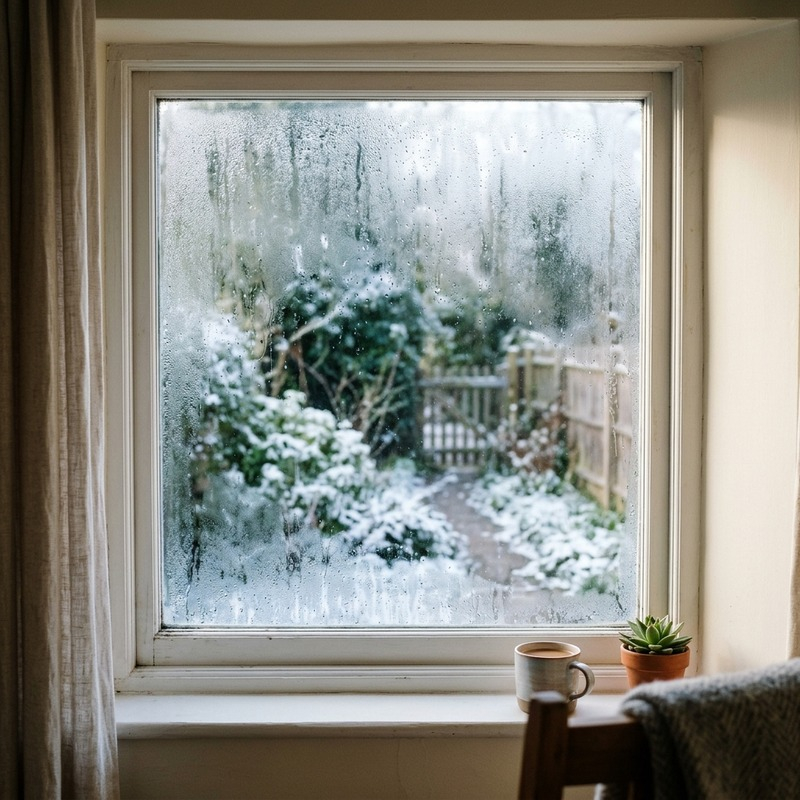
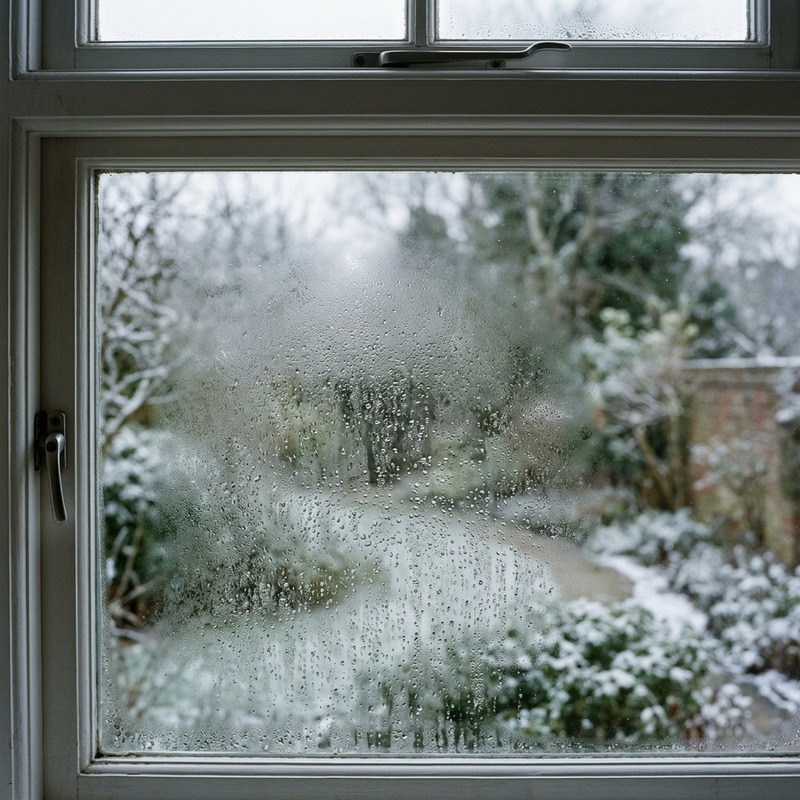
If I had to pick the question I am asked most once the mornings turn cold, it would be this one. Condensation forms when warm, moisture-laden indoor air touches glass that is colder than the air’s dew point, so the water vapour being carried turns back into liquid on the pane. That is the whole mechanism. What causes condensation on windows is almost never the window giving up on you. It is the combination of how much moisture your household is producing, how little of it is escaping, and how cold the inner glass surface is allowed to become. That last factor is where the glass build-up matters, and it is the reason the inner pane of double glazed windows and doors sits closer to room temperature than a single sheet of glass ever can.
This guide is about diagnosis rather than repair. Water on glass is a reading, not a verdict, and where it sits tells you something specific. Work through the sections below and you should be able to say what your windows are reporting.
The science, in one short paragraph
Air carries water vapour, and warm air carries more of it than cold air. The dew point is the temperature at which a parcel of air becomes saturated and can hold no more. Cool it below that point and the surplus vapour condenses on the first cold surface it meets. In a typical room, glass is the thinnest and least insulating surface, which makes it the coldest, which makes it the place you notice the problem first. The glass is not creating the moisture. It is revealing it.
Why it lands on the glass and not on your walls
Walls have bulk insulation, cavity space and lining board working for them, so their internal surface tends to track close to room temperature. A window has none of that depth. Heat moves through the pane and the frame far more readily, which drags the inside face towards the outdoor temperature on a cold night. A frame material that conducts heat quickly also creates a cold strip around the perimeter of the glass, which is where the first beads appear. If your condensation starts in the bottom corners and creeps upward, you are watching the coldest part of the opening do its work.
Condensation on the inside face of the glass
This is the common one, and it is a humidity story. Water on the room side of the pane means the indoor air is carrying more moisture than the glass temperature will tolerate. A light film on a cold morning that clears within an hour or two is ordinary household behaviour, particularly in bedrooms after a night with the door closed. What deserves attention is condensation still there at midday, or returning in mild weather, or appearing in rooms with no obvious moisture source. That pattern says the moisture load in the house is high and has nowhere to go.
Condensation trapped between the panes
If the misting sits inside the sealed unit and will not wipe away from either face, you are looking at a different problem. An insulated glass unit relies on a perimeter seal and a desiccant to keep the cavity dry. Once that seal is compromised, humid air works its way in, the desiccant saturates, and moisture condenses within the cavity. You will see a persistent haze, tide marks or faint streaking that does not respond to weather or to how you live in the house. That is a component at the end of its service life, not a habit to change.
Condensation on the outside face
Dew on the outer pane surprises people, and it is usually good news. It happens when the outer glass radiates heat to a clear night sky and drops below the dew point of the outdoor air, which is only possible because so little warmth is leaking through the glass to keep that surface warm. You will see it on still, cloudless mornings with damp air outside, and it burns off once the sun reaches the facade.
Reading the room, not just the window
Where you find the water narrows the cause considerably. Bedrooms collect moisture overnight from breathing behind a closed door that stops air exchanging with the rest of the house. Bathrooms and laundries produce a lot of vapour in a short burst, and if the extraction fan vents into a roof space rather than outside, that moisture simply redistributes through the ceiling. Any room where washing is dried indoors becomes the wettest room in the house by a wide margin. Unflued gas heaters release water vapour as they burn, so a room heated that way will always run humid. South-facing rooms that get little winter sun stay colder and mist sooner for the same moisture level.
Wet sills, mould and what happens if you leave it
Water that forms on glass does not stay there. It runs down, gathers along the bottom edge and pools in the frame rebate and on the sill, which is why wet sills are the complaint rather than wet glass. Sitting water swells timber, lifts paint and gives mould the damp surface it needs on sealant lines, curtains and blind fabric. Window systems include drainage channels that carry incidental water back outside, so if water is pooling instead of draining, check those channels are clear of dust and paint before assuming anything worse. Persistent black spotting around the perimeter means the moisture has been present long enough to matter.
Where ventilation fits into the diagnosis
A quick test tells you a lot. Open a window on both sides of the house for a few minutes on a cold morning and watch the glass. If the film clears and stays clear, you have a ventilation shortfall rather than a glazing fault, because the moisture was sitting in the room with no path out. If it returns almost immediately, moisture is being generated faster than any reasonable amount of airing can shift it, and you need to look at the source. The style of opening changes how easily you can run that air exchange, and a sash that swings wide on a side hinge, as casement windows do, scoops passing breeze into the room rather than letting it slide across the opening. That is worth knowing when you work out why one room clears quickly and another never does.
When to act
Treat it as routine if the film is light, appears on cold mornings only and leaves no standing water. Treat it as worth investigating if water pools on sills, if misting persists through the day, if it shows up in mild weather, if staining or mould is taking hold, or if the haze is sealed inside the unit. The first is your house breathing. The second is your house asking for a change.
If you are still not sure what your windows are telling you, the team at uPVC Windows Expert is happy to talk it through. Get in touch and we will help you make sense of it.
Frequently Asked Questions
What are the different types of condensation?
There are three to know. Interior condensation forms on the room side of the glass and reflects indoor humidity against a cold pane. Exterior condensation forms on the outer face when it cools below the dew point of the outside air. Interpane condensation sits inside a sealed glass unit and indicates a breached perimeter seal. Only the first is driven by how you live in the house.
Should you wipe condensation off a window?
Yes, and sooner rather than later. Wiping removes the water before it can run into the frame rebate, soak the sill or feed mould along the sealant line. Use a microfibre cloth or a small squeegee and dry the sill as well as the glass. Wiping treats the symptom, so if you are doing it every morning, work through the causes above as well.
Why are my window sills wet?
Almost always because condensation formed higher up on the glass and gravity took it to the lowest point available. The sill is the collection tray. Less commonly, wet sills point to water entering from outside through failed sealant, a blocked drainage channel or a gap at the head of the opening. The quick way to tell them apart is timing: condensation appears on cold mornings with no rain, while water ingress appears during or just after driving rain.
How much condensation on windows is normal?
A thin, even film on the coldest glass on a cold morning that clears on its own once the house warms is normal. Beads that run, water standing on the sill, misting still there in the afternoon, condensation in mild weather, or moisture on windows throughout the whole house at once all sit outside the normal range and are worth tracing back to a source.